Audience Building
Part of Content positioning for independent creators
Explaining a creator's focus in a profile bio
Write a creator bio that tells newcomers who the work helps, what it covers and what to expect next.
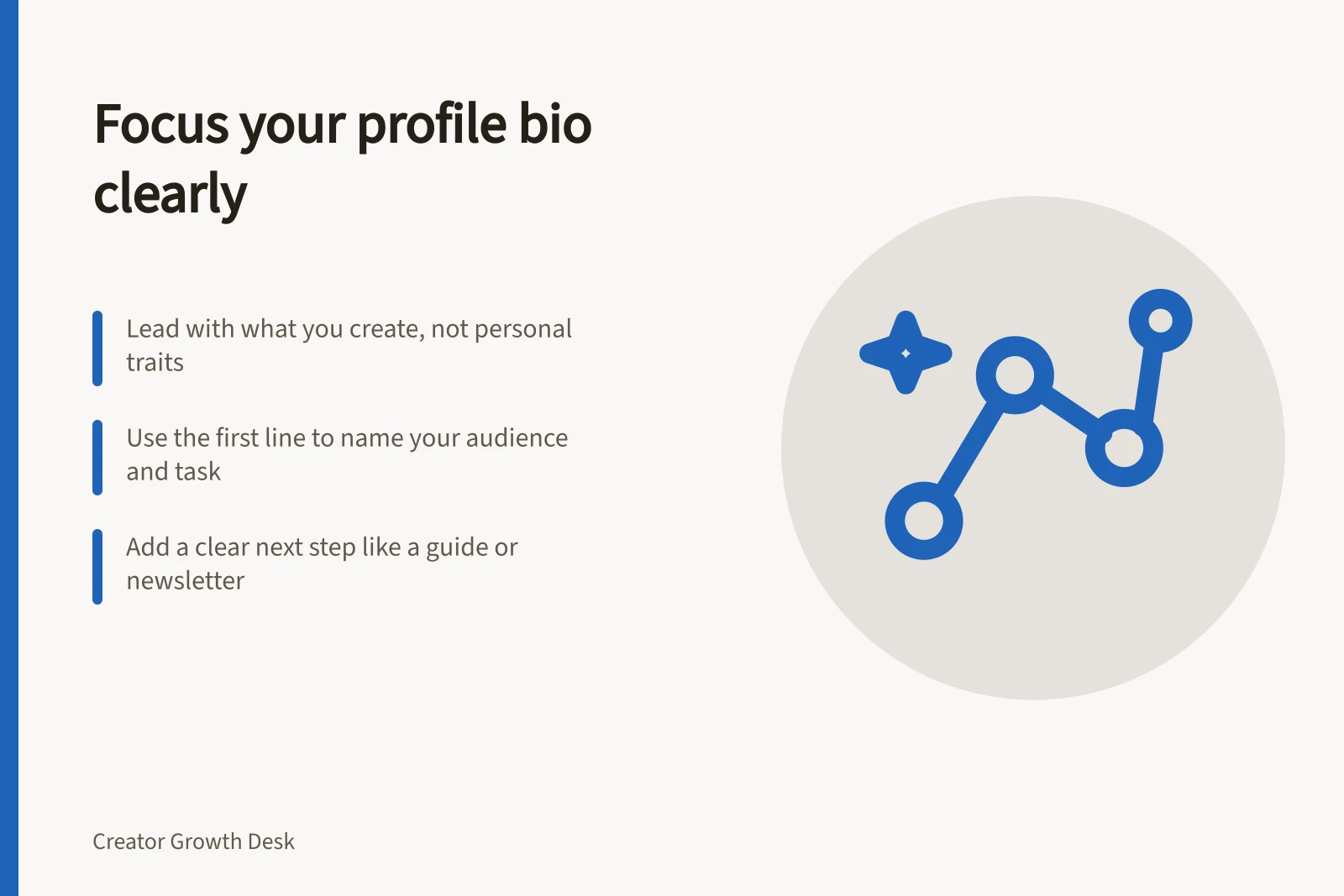
A profile bio should help a newcomer understand what you make, who it helps and what they can expect to find next. Lead with the work you publish. Add a credential or a link when it helps the visitor decide whether to explore further.
Put the focus in the opening line
“Simple clothing repairs with a basic sewing kit” gives a visitor more direction than “maker, learner, coffee lover”. Personality can have a place in a profile, but it should not hide the subject of the work.
Name an audience when it changes the advice. “Repair tutorials for people new to hand sewing” sets a different expectation from “advanced garment restoration”. You do not need to list every kind of person who might benefit.
Read the opening without your account name or picture. Does it still say what the content covers? Replace a vague phrase with the task, situation or kind of help visitors will recognise.
How to write a clear creator profile bio
- Start with your core focusState what you create or teach, e.g., 'Everyday clothing repairs with a basic sewing kit'.
- Specify your audience if it changes the messageE.g., 'for people new to hand sewing' or 'advanced garment restoration'.
- Add your approach in the next lineExplain how you work, e.g., 'I explain the decision before the stitch'.
- Include a relevant next stepLink to a current guide, newsletter, or resource—ensure it exists and matches the promise.
Before and after: Clear vs. vague profile bios
- Vague example
- Maker, learner, coffee lover
- Clear example
- Everyday clothing repairs with a basic sewing kit
Using personality in a profile bio
- ProsBuilds relatability and connection; adds warmth to your brand.
- ConsCan distract from the core subject if overused; may mislead visitors about content focus.
Use the next line for your approach
A second line can show how you handle the subject: “I explain the decision before the stitch, including when a mend may not hold.” That tells visitors what distinguishes the work. State a relevant qualification accurately if it helps establish the basis for your advice.
Everyday clothing repairs with a basic sewing kit. Learn how to assess damage, choose a fix and recognise when a simple mend will not do.
The visible work should support that wording. A visitor arriving after one repair demonstration should be able to find more pieces at the level and on the subject the bio describes.
If you include a next step, name the destination: a current guide, for example, or a newsletter covering the same subject. Check that it exists and is relevant before inviting visitors there.
Adapt it to the profile field
For YouTube, make the channel’s focus clear in concise wording. On LinkedIn, the profile tools include fields for a professional headline and an About section. Use the headline to state the focus briefly, then use About to add relevant detail.
A creator using both can make the headline clear at a glance and explain the approach in About. Read the wording in the actual profile view, since a sentence that works in one field may be too long or vague in another.
Compare the bio with the visible work
Look at the pieces a visitor is likely to see first. Do they match the bio’s subject and level? If the bio promises beginner demonstrations while recent work assumes advanced knowledge, revise the wording or make the visible work support it.
Ask someone unfamiliar with the account what they expect from the bio. Their answer may expose unclear wording. When your focus changes, update the bio so it describes the work people can actually find.