Audience Building
Part of Creator collaborations for audience growth
Choosing collaborators with complementary audiences
Assess a potential creator partner through a shared viewer question, distinct expertise and relevant follow-up content rather than follower count alone.
Choose a collaborator whose viewers are likely to care about your next piece of work, and whose expertise adds something yours cannot. Similar follower counts or shared hashtags do not establish that fit. Ask whether a viewer could move from one creator’s answer to the other’s while pursuing the same problem.
Map the overlap and the gap
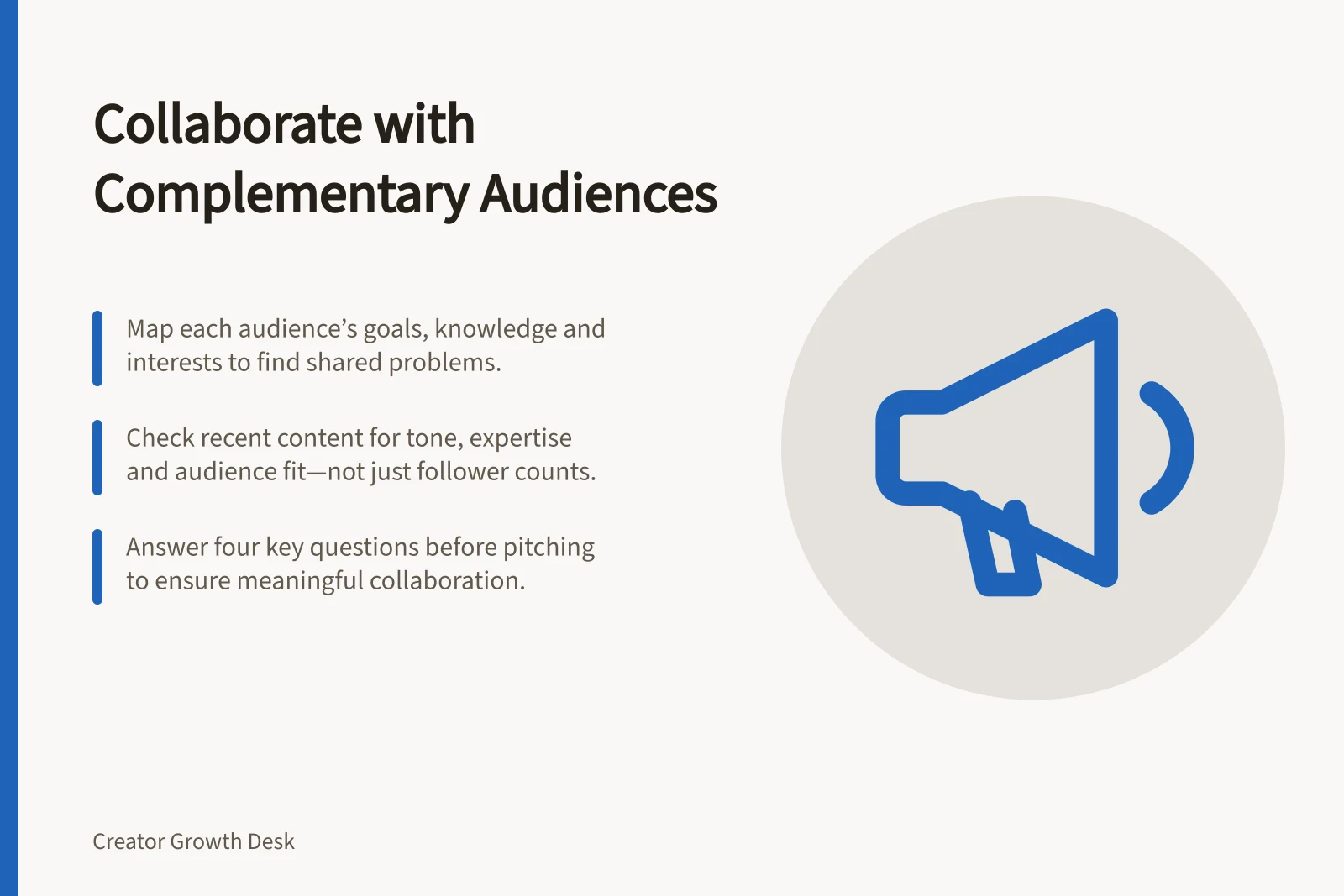
Write one sentence for each audience: who they are, what they are trying to do and what they already know. The audiences need enough overlap to recognise the same problem, plus a useful difference in perspective.
Two creators giving the same beginner advice may have little to add together. Two creators with no common question may struggle to make a coherent piece.
Suppose one creator explains apartment gardening and another shows low-cost cooking. A joint piece about growing and using herbs in a small space has a clear bridge. That does not mean their whole audiences overlap; the fit concerns viewers interested in that question.
Inspect work, not headline numbers
Watch several recent pieces, including ordinary uploads rather than only a creator’s most popular one. Check whether their explanations suit the audience you want to serve, whether comments reveal relevant questions and whether their usual tone would fit your community. Look for what the person can contribute through expertise or production work.
When screening a candidate, look beyond subscriber count: consider audience alignment, shared values and useful skills. Platform analytics may suggest channels your viewers also watch, which can help create a shortlist. An analytics-based shortlist does not establish how many people follow both channels.
Make a small fit check before pitching
For each candidate, answer four questions:
- What question could we answer together?
- What would each creator contribute that the other cannot?
- What relevant existing piece could a newcomer watch next on each channel?
- Would the result still serve our current communities if it brought few new followers?
If one person’s only contribution is access to their followers, develop the idea further before pitching it. A concise approach can name a piece of the prospective partner’s work, propose the shared question and describe each person’s role. Leave room for them to reshape the idea.
For assessing results after publication, see the related article on post-publication measurement.