Audience Building
Part of Community habits that support creator growth
Setting a useful tone in a creator comment section
Set clear comment expectations, model useful replies and make room for newcomers and fair disagreement.
Set the tone by modelling useful replies, making room for newcomers and holding praise and criticism to the same standard.
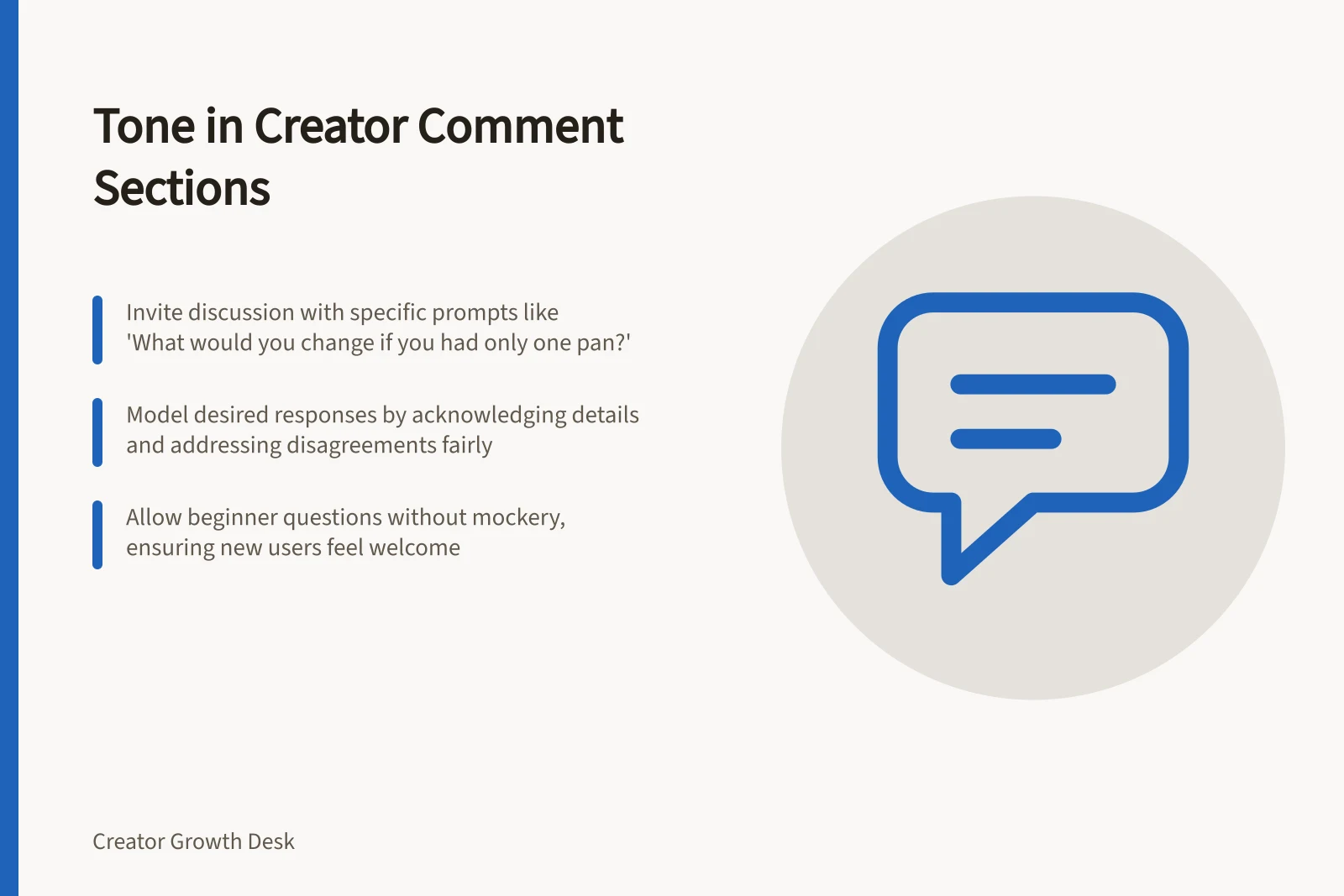
Give people a subject to discuss
Write an invitation that fits the piece. Under a cooking demonstration, “What would you change if you had only one pan?” gives viewers a situation to address. “Be nice” states an intention, but it does not help someone join the conversation.
Keep the thread understandable to a first-time visitor. If a regular refers to an old discussion, supply the missing context. Answer a newcomer’s question plainly, even when familiar commenters already know the answer.
YouTube comment moderation best practices
- Effective invitation example
- ‘What would you change if you had only one pan?’
- Ineffective instruction
- ‘Be nice’ – lacks direction for engagement.
- Context for new viewers
- Always explain prior discussion references.
Model the response you want
When someone adds a detail, say why it helps. When someone disagrees, address the point and the condition under which it may be true. A valid correction deserves checking and, where needed, a correction to the content itself.
Apply your rule even when an insulting commenter agrees with you. A brief boundary reminder may help when a substantive point remains to discuss. Repeated attacks or spam may call for removal or a platform report. Leaving praise untouched while deleting fair criticism makes the stated standard hard to trust.
Leave room for ordinary questions
A beginner question can reveal a missing explanation. Give the first step or direct the person to an existing answer without inviting others to mock the repetition. Do not ask people to disclose private circumstances to prove they belong in the discussion.
A temporary measure is not a substitute for deciding what behaviour is acceptable.
Read a few recent threads as someone new to the channel. Can you tell what is being discussed? Can a person ask a basic question or disagree without becoming the subject of the thread? Use what you see to adjust your next invitation and replies.