Publishing Rhythm
Part of A publishing rhythm creators can sustain
Building a backlog without stockpiling outdated posts
Keep a creator content backlog useful with clear stages, freshness checks and a review before scheduled release.
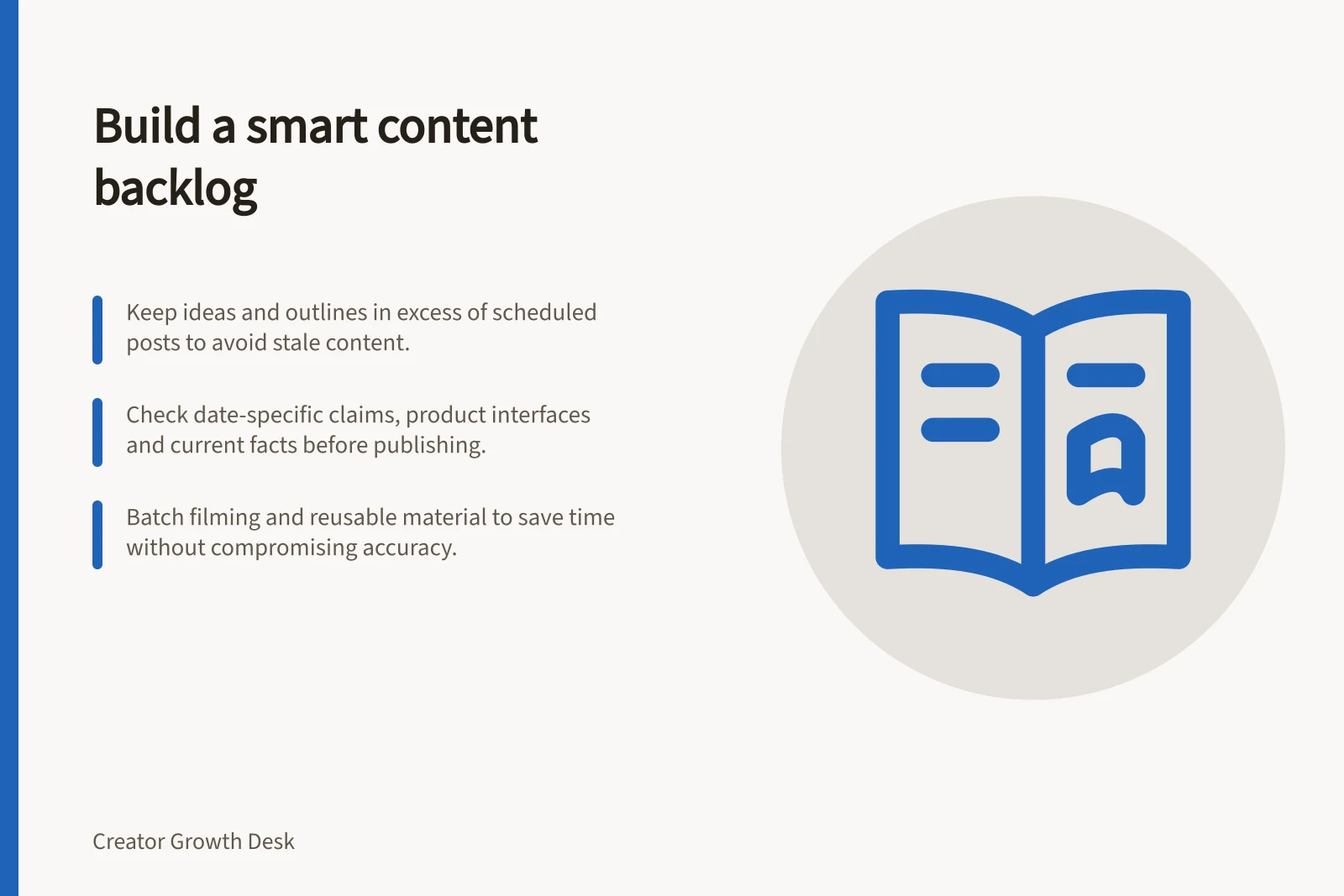
Build a backlog that gives you choices, not a queue of posts that must go out unchanged. Keep more ideas and outlines than finished, scheduled pieces. Before anything reaches the audience, check anything tied to a date, product interface or current claim.
Use stages that show what is ready
Give each item a clear state: idea, scoped question, outlined, produced, checked or scheduled. Record the audience question and what remains to verify. An idea can wait without becoming stale copy; a finished tutorial needs another look if its instructions may have changed before release.
A simple entry can contain a working title, the answer the piece should deliver, the material it needs and its next review date. Keep it short enough to maintain. The purpose is to see the next action, not to create a second project around a spreadsheet.
Sort by how quickly the answer could date
Some subjects can be outlined well ahead: a method you can demonstrate, an explanation of a stable decision or a recurring question. Others depend on a launch, a temporary offer, a changing interface or a public event. Keep these closer to publication and make their verification step explicit.
For time-sensitive pieces, leave the final details until closer to publication. An older idea may still be useful even when its draft answer needs fresh evidence.
For each item, ask: What fact would make this misleading if it changed? When can I check it? If the check cannot happen before the planned release, hold or replace the piece.
Batch material that remains useful
When several pieces need the same location, equipment or materials, filming them together may avoid repeated setup. Outlines and reusable demonstrations may also be prepared together, provided each final piece answers its own question.
Keep changing claims separate from durable material. For a software tutorial, the task and structure may be ready early, while an exact menu path needs a fresh check. For a seasonal topic, capture the idea early but confirm dates and availability before writing the final instruction.
Check before release
Before a scheduled piece goes live, read it as a newcomer. Check that the title matches the answer; verify dates, names, screenshots, steps and conditions that change the advice. Confirm the destination and publishing settings. If the premise has changed, revise, reschedule or drop the piece.
On YouTube, creators can schedule a video's publish time. The tool handles timing, not factual review. Complete the review before the scheduled moment and record what was checked.