Publishing Rhythm
Part of Diagnosing a creator growth plateau
Testing a format change without abandoning the core audience
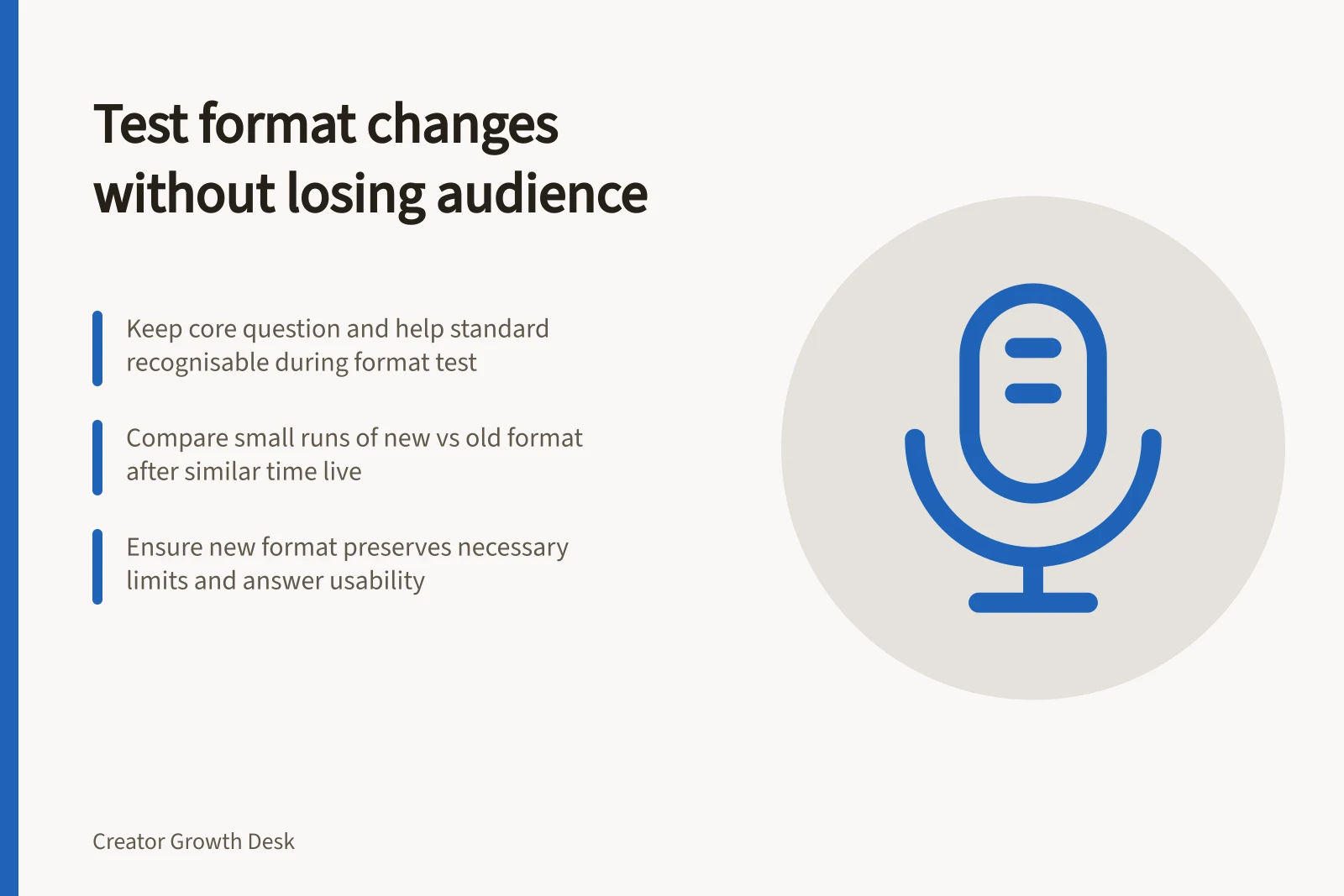
Plan a small format trial that keeps the audience question stable, preserves the full answer and interprets the response in context.
After growth has plateaued, test a format change by keeping the audience question and standard of help recognisable, while changing how you deliver the answer. Decide what the new format should improve, publish a small run of complete pieces and compare them with relevant work after similar time live. A single strong or weak upload cannot settle the decision.
Name the problem with the present format
Start with a practical difficulty. Perhaps viewers need to see a process that text makes hard to follow, or a long explanation contains one decision that a brief demonstration could answer clearly. State the audience, its question and what the present format makes difficult before choosing a Short, longer video, live session or another form.
Outline the answer in the proposed format and keep any condition that changes the advice. If the shorter treatment removes a necessary qualification or requires another piece for the main step, revise it. A format earns a place by making the answer usable, not by being shorter.
Keep the promise recognisable
Choose a question that belongs beside your existing work. A hypothetical creator helping teachers record clear spoken lessons might demonstrate one microphone-position check in a Short rather than explain it in a long talk.
The short piece would still need to name the setting and any important limit. Its opening should let a newcomer see why it belongs on that channel.
Keep the topic and audience reasonably stable during the run. A simultaneous shift in subject, audience, release pattern and format would leave little basis for judging the format's fit.
Review each format in context
Use available YouTube Analytics reports to review performance and audience behaviour. Treat them as context for choosing a trial, not as predictions of how viewers will respond to your treatment.
Use measures that fit each piece. For a Short, inspect the share who stayed past the initial seconds and whether the answer is reached. For a longer demonstration, inspect the necessary passages and viewing time.
Read relevant comments for missing context, remembering that commenters are a subset of viewers. Compare similar questions after similar time live, and account for how many pieces you published in each format before comparing total views.
| Check | Question |
|---|---|
| Core fit | Does the piece answer a question the established audience recognises? |
| Answer quality | Does the format preserve the demonstration and necessary limits? |
| Viewer response | Do viewers stay long enough to reach the useful part and ask relevant follow-ups? |
| Production cost | Can this format be made and checked without crowding out core work? |
Decide what belongs in the mix
Keep the format if it delivers the existing audience promise well and fits available production time. Adjust it if the answer needs more context. End the run if the format repeatedly makes the answer less usable.
Record the observations and remaining uncertainty. Ordinary uploads reach changing audiences, so the result guides a production choice without proving that format alone caused a change in growth.