
Retention
Part of Turning viewers into returning followers
Measuring whether a format brings viewers back
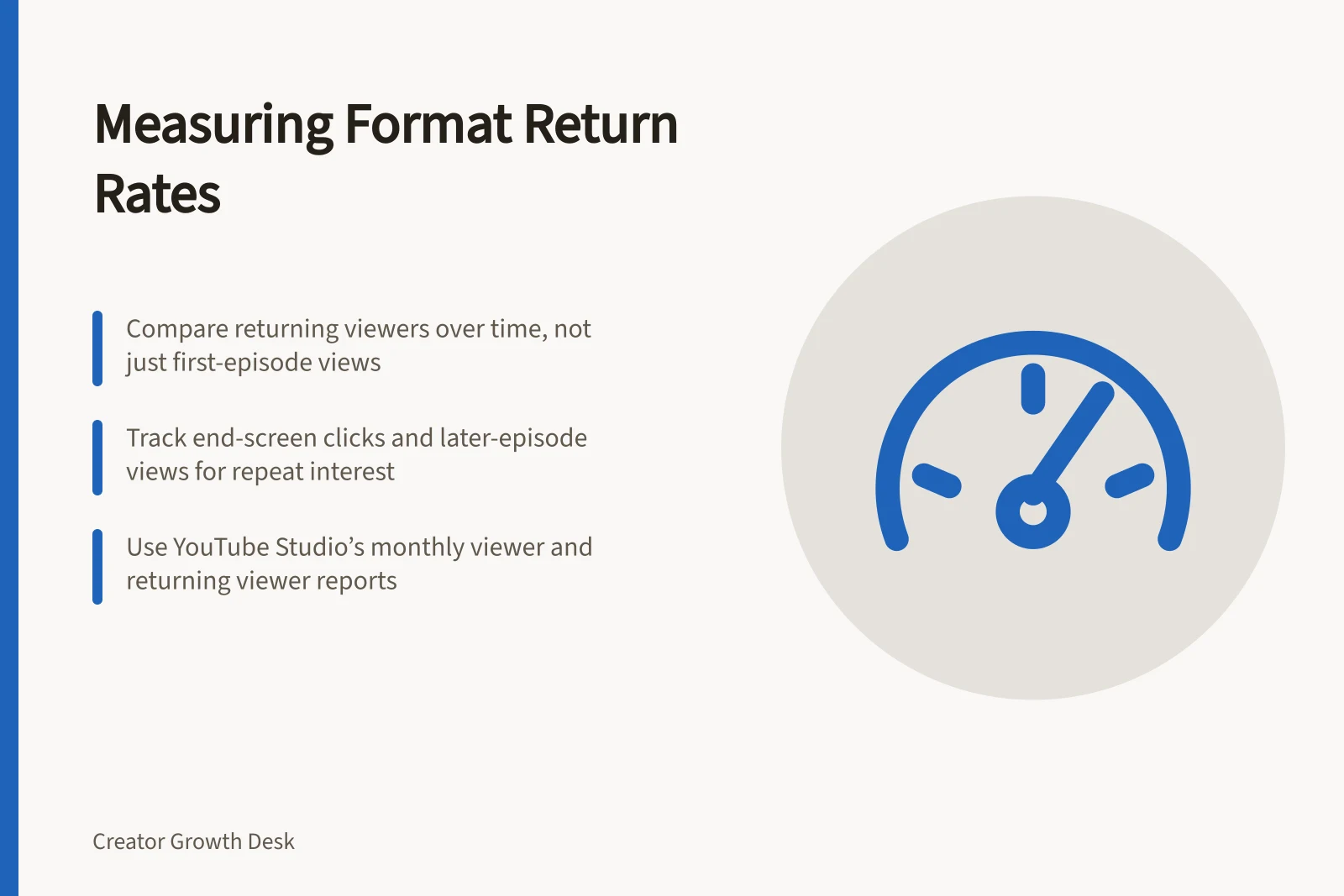
Measure a recurring format by whether people return to watch later instalments, not only by how many views its first episode earns.
Measure a recurring format by whether people return to watch later instalments, not only by how many views its first episode earns. Compare audience behaviour over a meaningful period.
Keep promotion, release timing and topic differences in view. A format can attract new viewers without yet building repeat viewing.
Choose the return question
Decide whether you mean a second video watched in the same visit, a later episode watched in another week, or continued viewing over months; each is a different signal. YouTube groups viewers as new, casual and regular. Treat these as broad audience signals, not a precise measure of whether a new format brings people back.
While the series is young, use shorter-term evidence: later-episode views by people who previously watched the channel, whether viewers use relevant end screens to reach another video, or a rise in casual viewers. An end-screen click shows a path to another video, not proof that a viewer became a lasting follower.
In YouTube Studio, use the reports showing monthly viewers and returning viewers. Read returning viewers as a repeat-audience signal, and compare it with the monthly-viewer figure for context; these are audience-level measures, not counts attributed to a particular format.
Pair those audience figures with video-level performance in YouTube Studio: views, watch time, retention, traffic sources and audience behaviour. These help you assess each instalment, but do not by themselves show that the same people came back.
Key Audience Metrics in YouTube Studio
- Monthly viewers
- Audience-level measure of reach
- Returning viewers
- Signal of repeat audience engagement
- Views and watch time
- Video-level performance indicators
- Retention rate
- How long viewers stay engaged
Build a fair comparison
Compare episodes after a similar number of days live. Note if one received paid promotion, a collaboration or an unusually broad topic. A large first episode can make later numbers look weak even when people who care about the series keep returning. Conversely, a small but steady audience may show the format's value to a narrow group.
Compare the monthly-viewer and returning-viewer figures across successive monthly reporting periods while the format is publishing. Look for whether returning viewers rise, and check whether promotion, release timing or topic differences could explain the change.
Track a few measures alongside the editorial question:
| Measure | What it may tell you | Limit |
|---|---|---|
| New viewers | Discovery of the format | One-off search visits may not return |
| Casual or regular viewers | Repeat channel viewing | Platform definitions and time windows matter |
| Later-episode views | Continued interest in the series | Topic and promotion affect each episode |
| End-screen clicks | Movement to a suggested next video | Not all viewers see or use end screens |
Decide what to change
If first episodes attract new viewers but later ones do not, inspect whether the next topics genuinely follow. If repeat viewing grows but discovery is weak, improve the title and opening so a newcomer understands the promise. If every episode answers a separate one-off question, a loose library may be more honest than a tightly numbered series.
A rise in returning viewers across comparable monthly reporting periods is evidence that more viewers are returning to the channel, not proof that one format caused the change. Read it alongside episode views, watch time, retention and traffic sources, and note the dates and comparison window.
Record the date, platform definition and comparison window with any conclusion. Subscriber count and viewer segments are clues to audience behaviour, not definitive measures of active audience, reach or monetisation. Check the videos for the reason behind the measures.

![Check if packaging reaches your intended audience: This piece is for [person in a situation] who needs [decision] and delivers [answer].; Compare the routes into the video before interpreting a rate.; If the title or image suggests the wrong task, make that element more exact. Checking whether packaging attracts the intended audience](/covers/checking-whether-packaging-attracts-the-intended-audience-640.webp?v=114adaa3)