Content Ideas
Part of Creator audience analytics that inform decisions
Recording audience insights before choosing next month's topics
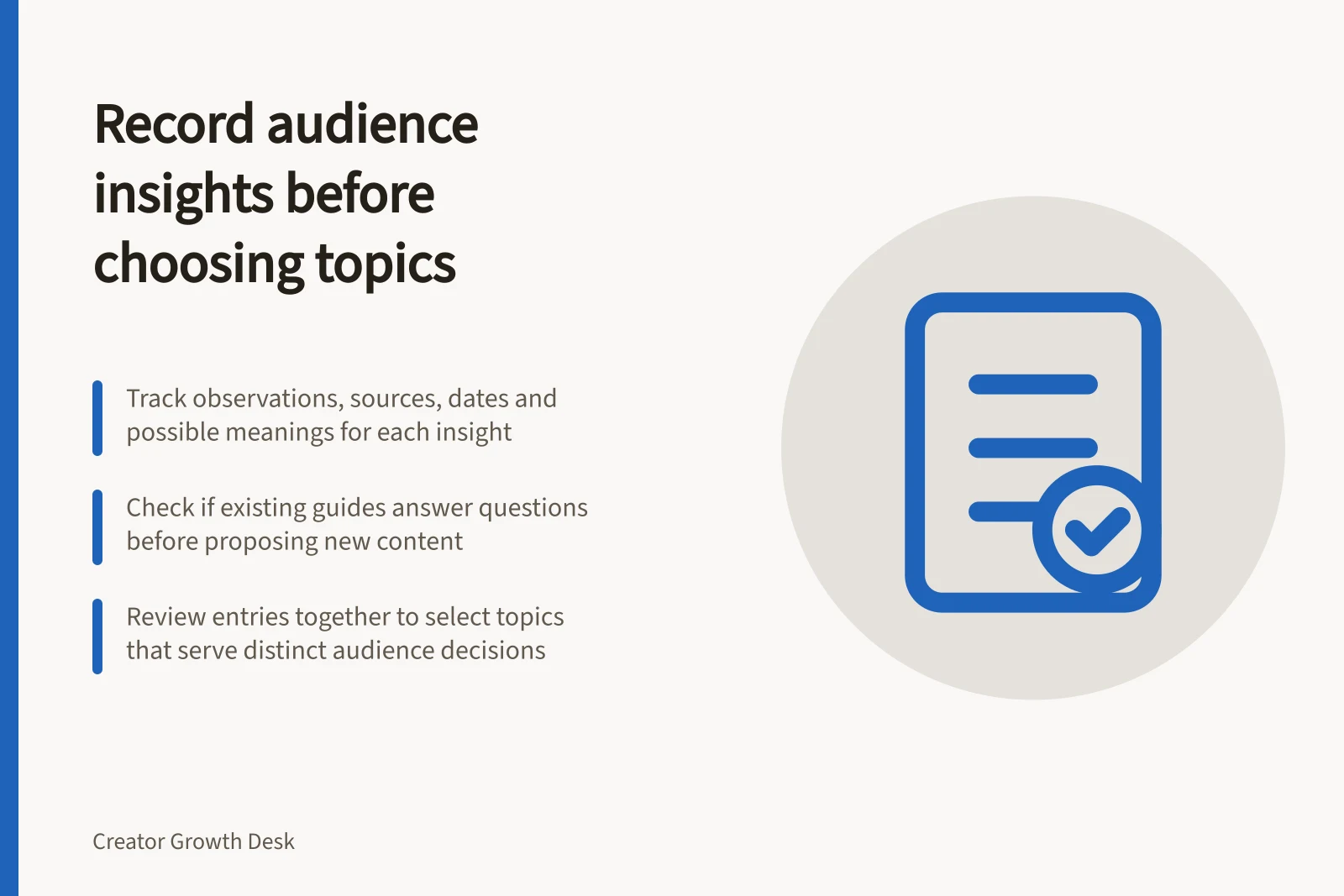
Record observations, other explanations and existing coverage before choosing next month’s creator topics.
Before choosing next month’s topics, record what the audience evidence shows, what you infer from it and which decision remains open. Choosing directly from the most-viewed posts can repeat an unusual result and miss a useful next question.
Keep one entry per possible need
Use a short record: the observation, its source and dates, a possible meaning, another explanation, existing coverage and a proposed action.
Keep dashboard measures under their platform names. A reply is evidence of one commenter’s question, not a count of everyone who needs the answer.
A hypothetical entry might read: “Several visible replies to the balcony setup piece ask what to check before moving a container. This may point to a missing decision. The replies came from commenters, and an existing guide may already answer it. Check that guide before proposing another piece.”
Platform analytics can suggest questions to inspect, but they do not state what every viewer wanted from a specific piece.
Show the step from evidence to proposal
Suppose an older answer receives new Search visits. Check whether its instructions still work and whether its title describes the answer before commissioning another topic.
If a later piece draws a precise question about an omitted step, correct the existing answer if it is incomplete. Make a new piece when the question requires a distinct answer.
For each candidate, ask: What did we observe? What else could explain it? Is the answer already available or simply hard to find? What decision would the proposed piece help someone make?
Record the answers beside the source and dates so the suggestion can be reviewed later.
Choose the month’s topics from the record
Review the entries together. Choose questions that serve distinct decisions for the audience you intend to help.
Hold a candidate when its only support is a large raw view count or when you cannot answer it credibly. Keep a promising but uncertain idea marked for further checking rather than presenting it as established demand.
For each selected topic, write the audience situation, exact question, answer the piece must deliver and evidence that prompted it. Check the published work for overlap.
At the end of the next month, return to the record: note what was published, what questions appeared and whether an earlier interpretation needs revision.
The record should let another editor see why a topic was chosen without treating the decision as a proven audience preference.