Creator Analytics
Part of Diagnosing a creator growth plateau
Separating fewer impressions from lower viewer interest
Read YouTube impressions, click-through rate and traffic sources together to investigate a fall in views without assuming its cause.
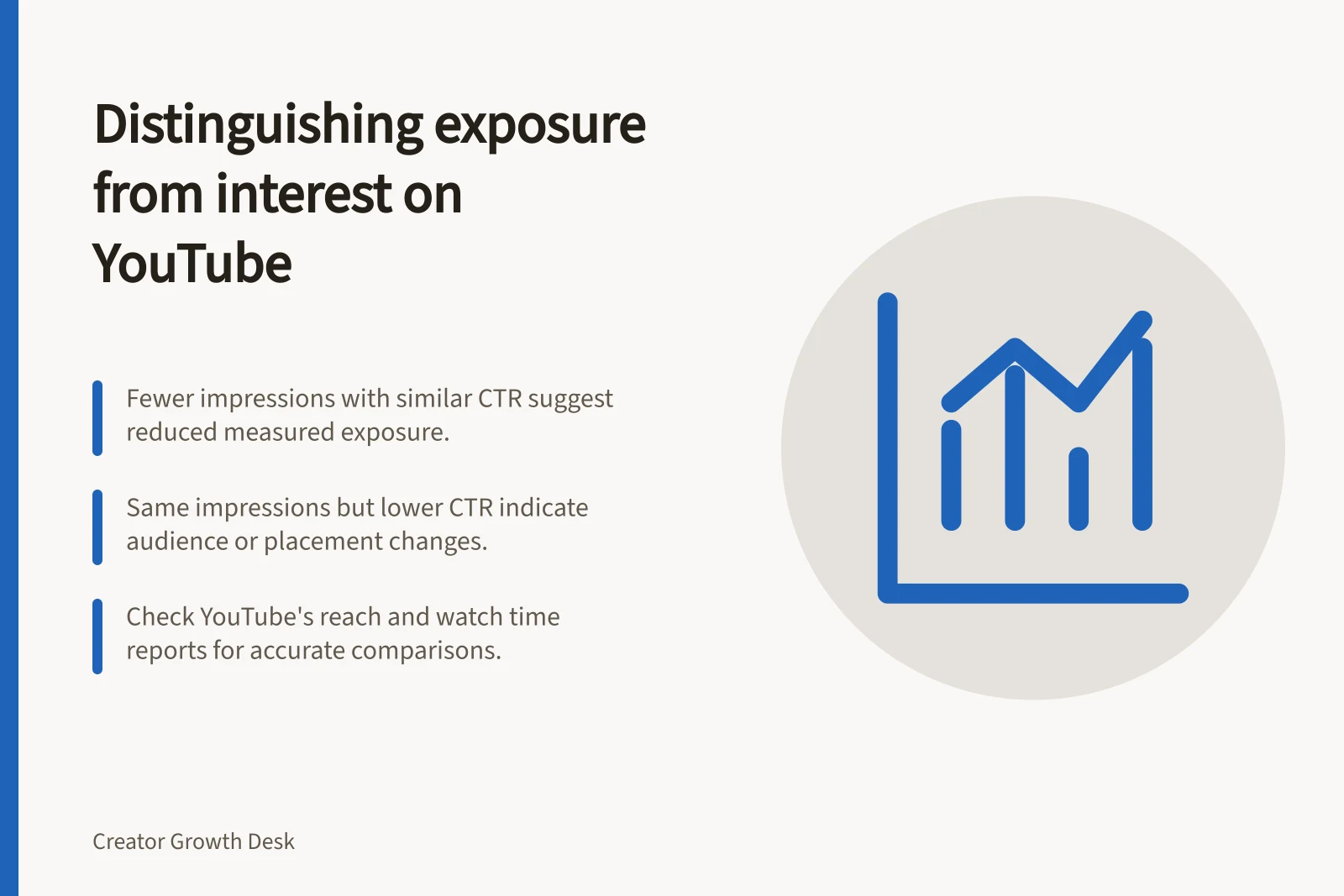
When views fall, compare measured exposure with response to that exposure. On YouTube, fewer registered thumbnail impressions with a similar click-through rate point first to less measured exposure. Similar impressions with a lower rate mean fewer views arose from those impressions. Neither pattern proves that interest in the topic changed or identifies a cause.
Compare similar opportunities
Choose videos with similar questions, formats and time live. Record their main traffic sources before comparing rates. A Search-led tutorial and a video shown mainly on Home meet viewers in different situations. A channel-wide average can hide a change in where impressions came from.
When comparing exposure with response, use YouTube's reach reporting alongside its thumbnail impressions and watch time reporting.
| Pattern in comparable videos | First question to investigate |
|---|---|
| Impressions fell; click-through rate is broadly similar | Which source supplied fewer impressions? |
| Impressions are similar; click-through rate fell | Did the audience or placement change, and does the topic and package still fit? |
| Both changed | Did the source mix change before judging either measure? |
| Both are steady; total views fell | Did views from routes outside counted impressions change? |
Check what the rate counts
Check YouTube's current definitions for counted impressions and click-through rate before comparing periods.
For arithmetic only, imagine one video with 10,000 counted impressions at a 4% click-through rate and another with 5,000 at the same rate. That represents 400 versus 200 views from counted impressions.
The measured opportunity fell; the example says nothing about why. If both had 10,000 impressions but the later rate was 2%, investigate the topic, title and thumbnail while checking whether the impressions reached comparable viewers.
Check what happened after the choice
If measured exposure fell while comparable viewers still chose and watched the video, inspect source-level changes and the subject's relevance. YouTube has a help page on external factors for its recommendation system; your report does not identify which external factor applies.
Record the reporting window, traffic sources and one next check.
Steps to investigate a drop in YouTube views
- Record the reporting window
- Identify traffic sources
- Check for source-level changes
- Assess subject relevance and viewer fit
- Review external factors affecting recommendations