Creator Analytics
Diagnosing a creator growth plateau
Locate whether a creator growth plateau reflects output, exposure, viewer choice, viewing experience or return behaviour before changing your content plan.
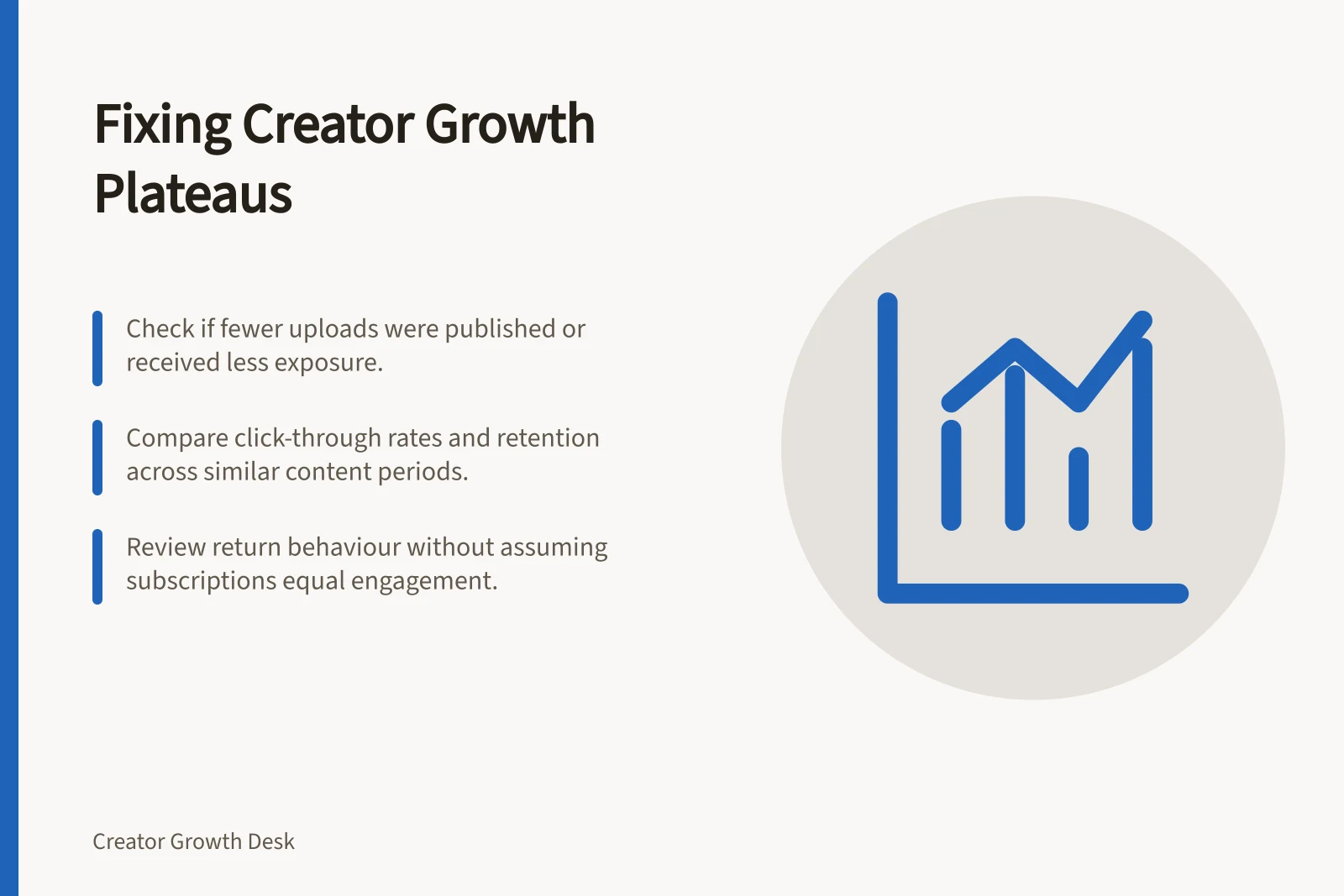
A plateau is a reason to investigate, not a diagnosis. Check whether you published less, whether similar uploads received less exposure, whether fewer people chose them, or whether viewers stopped finding them useful. Compare similar work after similar time live before changing your niche, format or schedule.
Define what has levelled off
Name the outcome: views, active viewers, returning viewers, subscribers or enquiries. Record when the change began, what you published in each period and any unusual promotion.
Fewer total views after publishing fewer pieces do not show that each piece performed worse. If one unusually successful upload dominated an earlier period, inspect ordinary uploads too.
On another platform, use that platform’s own reports and definitions.
Locate the change
| Stage | Question | Next check |
|---|---|---|
| Output and exposure | Were fewer pieces published, or did comparable pieces receive fewer impressions? | Separate publishing volume from exposure per piece and inspect traffic sources. |
| Choice | Did fewer people watch after seeing a registered thumbnail impression? | Compare click-through rate within similar sources and audiences. |
| Viewing | Did people reach the promised answer? | Watch the opening and any passage where viewing changed. |
| Continuing interest | Did people return for related work? | Review return behaviour over time without treating a subscription as a repeat view. |
Check exposure per piece, then the response to the impression. A retention dip marks where to look, not why it happened.
Check who the work serves
A popular topic may attract subscribers who have little reason to watch the next piece. Compare what the entry piece promised with the related answers you published afterwards. A useful one-off answer need not lead to a return visit.
YouTube's viewer reports distinguish new, casual and regular viewers, but they may not give an immediate verdict on a new topic. Subscriber count is also an imperfect estimate of the active audience. Aggregate return measures cannot establish that subscribers who gained from one upload watched a later one.
Choose the next investigation
Write a short working diagnosis tied to an observation, such as: “Tutorials of the same kind received fewer Search impressions, while their response measures were broadly similar.” Then choose one relevant next check or editorial change. Changing the topic, format and publishing pace together would make the result difficult to interpret.
Record the pieces compared, their reporting windows, the leading explanation and what would weaken it. Review the next run against the same measures.
In this guide
- Separating fewer impressions from lower viewer interestRead YouTube impressions, click-through rate and traffic sources together to investigate a fall in views without assuming its cause.
- Finding topics that attract followers but not returning viewersCompare subscriber entry topics with later content and returning-viewer signals without mistaking aggregate reports for individual tracking.
- Testing a format change without abandoning the core audiencePlan a small format trial that keeps the audience question stable, preserves the full answer and interprets the response in context.