Platform Distribution
Part of Cross-platform distribution for creators
Tracking whether cross-posting brings a new audience
To judge cross-posting, look for relevant people who were not already engaging with your work, then see whether they return or take a useful next step.
To judge cross-posting, look for relevant people who were not already engaging with your work, then see whether they return or take a useful next step. View totals alone cannot show that: the same person may see the content in several places, and each platform measures views differently.
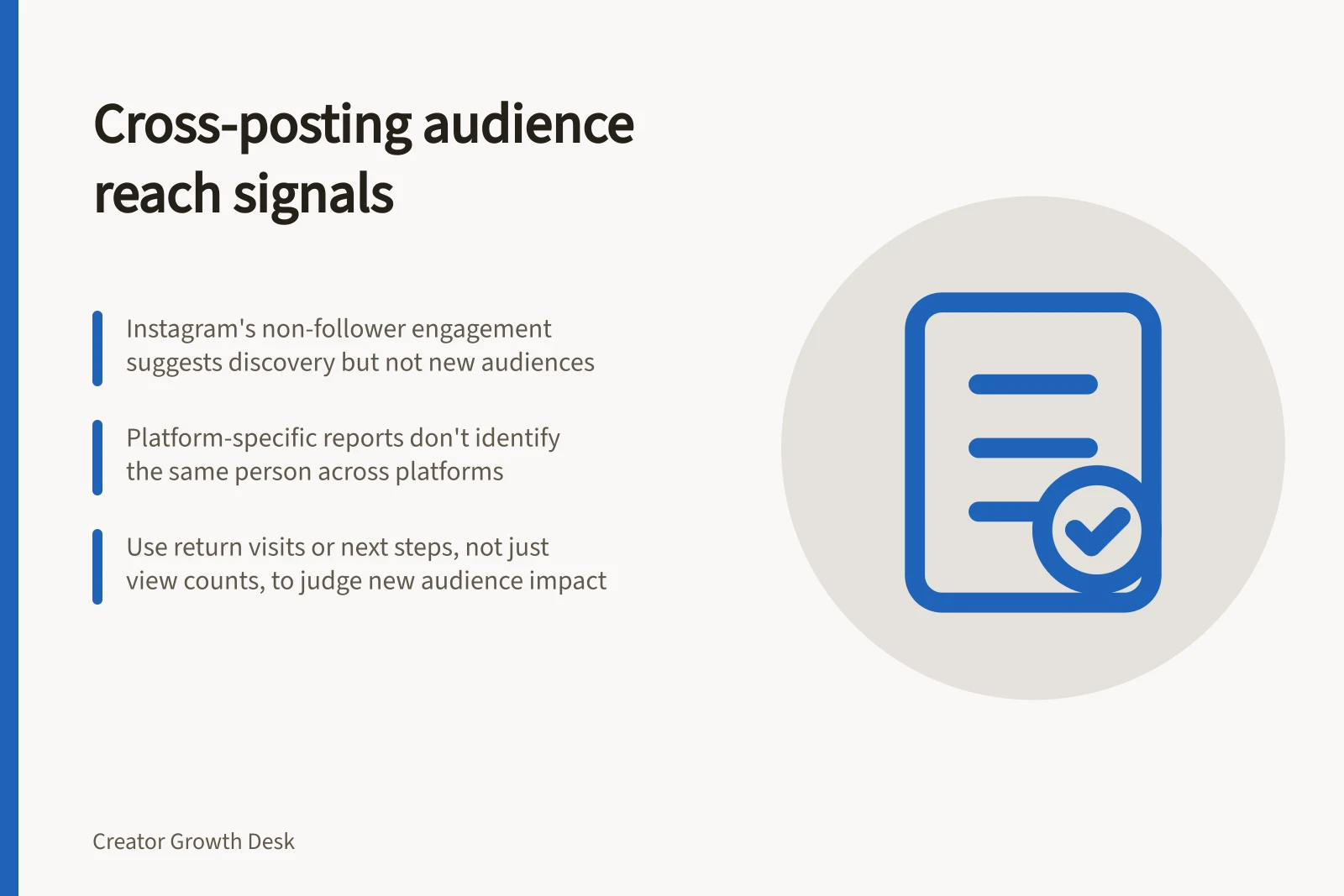
A platform’s non-follower figures can indicate discovery there, but they do not prove those people are new to your work across platforms. Treat them as a signal, not a count of unique new people.
Choose signals within each channel
Record the original piece, adapted version, posting date and the audience question it addresses. Use each platform's own audience and engagement reports to see whether the new channel reached unfamiliar viewers.
Audience reports are platform-specific and can help you see how people engage within that platform, but they do not identify the same person across platforms. Do not read them as a shared identity graph.
On Instagram, check its own insights for Accounts reached and the follower/non-follower split in Accounts engaged for posts, stories and Live. Accounts reached counts unique accounts on Instagram; non-follower engagement suggests discovery there, but does not prove those people are new to your work or absent from another platform.
Instagram audience demographics require a preset timeframe and more than 100 accounts reached; follower trends require at least 100 followers. Its timeframe selector covers the past 90 days, so compare within a consistent available window and keep older results in your own records.
For other channel checks, Facebook's Meta Business Suite has Insights > Audience; LinkedIn has Page analytics; and TikTok has TikTok Analytics. The cited audience activity and follower activity views can add context, but activity timing is not a count of new people reached.
Give each platform a separate tagged URL to the same destination. Use the UTM parameters utm_source, utm_medium and utm_campaign on each link, with a consistent campaign value and a lowercase platform name as the source; use utm_content to distinguish the post or link when useful.
In Google Analytics, compare visits and key actions associated with each tagged source and campaign. This connects a click from a particular cross-post to site activity, but it does not prove the visitor had never encountered your work elsewhere.
If a post sends people to a site, keep those outcomes separate from social reach. Site analytics and pixel setup cover clicks, sessions, add-to-carts and purchases; Google Analytics is one named performance-tracking example, but these outcomes do not identify unique viewers across platforms.
Compare similar content over a reasonable period. A launch-day spike may reflect existing followers or a platform push rather than durable new interest. Look for return visits, relevant comments, subscribers who continue to watch, or visits to the longer explanation where such data is available.
Set the observation window before comparing versions and use the same window for each platform. The available Instagram timeframe is limited to the past 90 days, so keep older results in your own records rather than treating platform windows as a long-term comparison.
Decide what to repeat
Estimate the time spent recutting, captioning and responding. If a second platform brings useful new conversations, keep the adaptation pattern that produced them. If it adds views but little sign of a new relevant audience, change the topic or format before increasing volume.
Use comparable posts on each platform as your baseline, and decide in advance which useful outcome you want to see. Do not treat a view-count increase alone as proof of a new audience; judge the platform-specific signals alongside return visits or other useful next steps where available.
Without person-level cross-platform data, you cannot count exact unique reach by summing platform dashboards. Keep each platform's non-follower and engagement measures separate from site outcomes, treat them as directional evidence, and avoid promising that one repost created a particular number of new fans.